

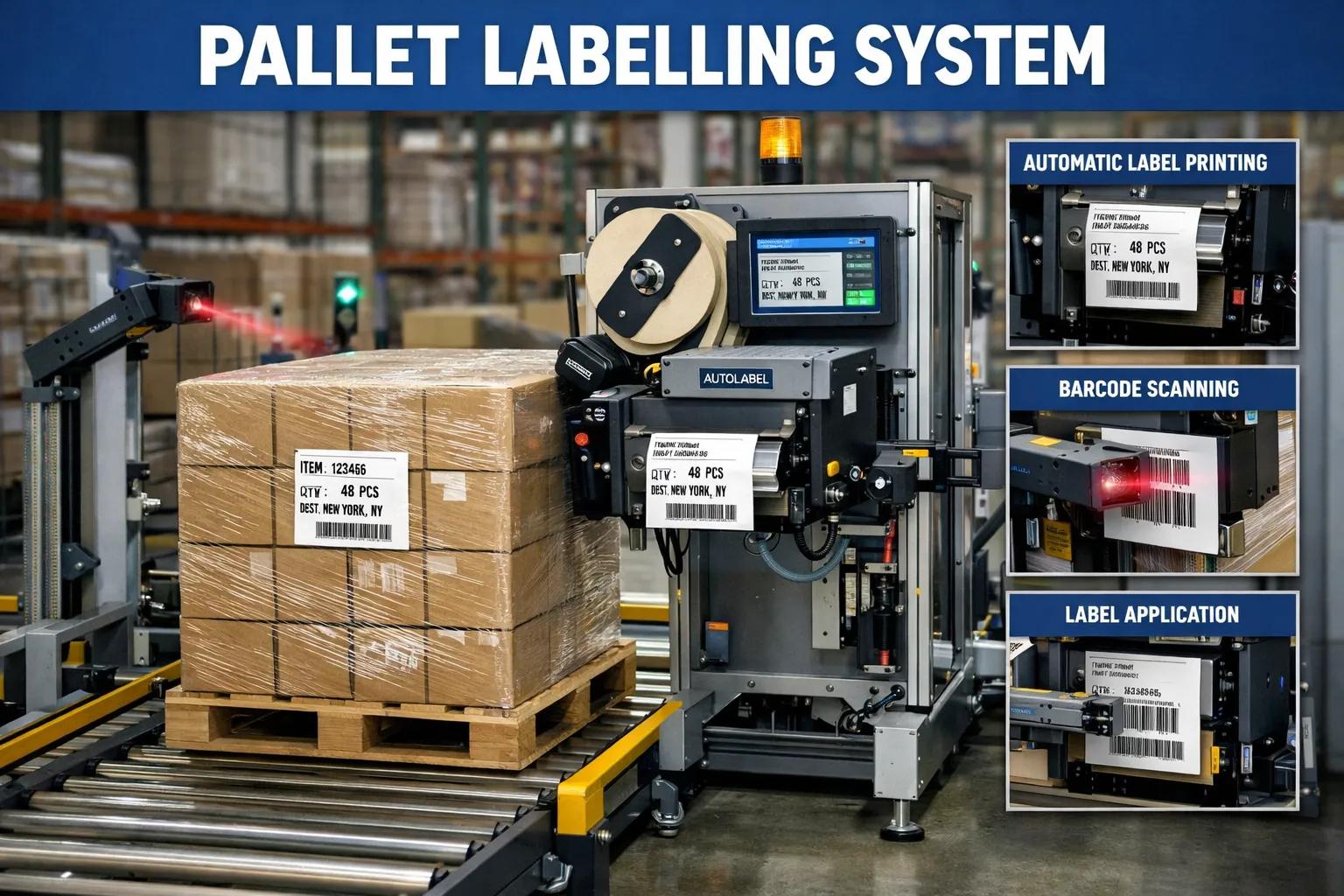
With growing focus on automation, the global pallet labelling system market is evolving to support efficient distribution and inventory control. The report outlines key developments, technology trends, competitive environment, and business strategies influencing the industry. It explains how organizations are improving traceability, reducing errors, and modernizing logistics operations. The study offers a comprehensive view of regional developments, innovation trends, and long term market direction supporting industry growth.
Market Size and Forecast
The market was valued at USD 2.63 Billion in 2025 and is projected to reach USD 5.40 Billion by 2034 at a CAGR of 8.33%. Growth is driven by increasing need for accurate inventory management, logistics automation, and digital supply chain visibility.
The report includes insights on industry trends, competitive landscape, technology adoption, and regional developments. It explains how businesses are improving operational efficiency through labeling solutions.
Market Snapshot
Rising automation, expanding ecommerce, and growing warehouse modernization are shaping demand for pallet labeling solutions across industries.
Key Drivers
Increasing warehouse automation
Rising ecommerce logistics demand
Need for accurate inventory tracking
Compliance and traceability requirements
Integration with digital supply chains
Market Segmentation Overview
The market is divided into categories based on product type, application, technology, and end user. This segmentation helps understand industry adoption patterns and operational requirements.
By Product Type Automation level defines system selection across industries.
Automated Pallet Labeling Systems: Used for high volume environments requiring speed and accuracy.
Semi-Automated Pallet Labeling Systems: Provide flexible solutions for mid scale operations.
Manual Pallet Labeling Systems: Suitable for smaller businesses with lower volumes.
By Application Applications highlight industry specific usage.
Logistics and Warehousing: Supports tracking and inventory visibility.
Manufacturing: Enables production and distribution tracking.
Retail: Helps stock movement and store distribution.
Food and Beverage: Ensures traceability and compliance.
Pharmaceuticals: Supports strict tracking needs.
Others: Includes additional uses.
By Technology Technology improves identification accuracy.
Barcode: Widely used and cost effective.
RFID: Enables real time tracking.
QR Code: Supports detailed information storage.
Others: Emerging solutions.
By End User Business scale influences adoption.
Small and Medium Enterprises: Focus on efficiency improvement.
Large Enterprises: Use integrated automation systems.
Key Players
Competition remains active with innovation driven strategies.
Zebra Technologies Corporation: Provides advanced identification technologies.
Honeywell International Inc.: Offers automation solutions improving productivity.
Videojet Technologies Inc.: Focuses on industrial printing and labeling.
SATO Holdings Corporation: Develops supply chain identification solutions.
Avery Dennison Corporation: Provides intelligent labeling materials and technologies.
Companies focus on innovation, integration, and expansion strategies.
Regional Dynamics
Regional demand varies based on logistics maturity and industrial growth.
North America: Strong technology adoption supports demand.
Europe: Regulatory standards drive labeling usage.
Asia-Pacific: Rapid industrialization boosts adoption.
Latin America: Growing logistics networks support growth.
Middle East & Africa: Infrastructure development encourages adoption.
Opportunities
Expansion of ecommerce logistics
Growth in warehouse automation
Adoption of RFID technologies
Increasing supply chain digitization
Demand for compliance solutions
Challenges
High initial investment
Integration complexity
Small business budget limitations
Technology maintenance requirements
Supply chain disruptions
Future Outlook
The market is expected to evolve with increased automation, smart identification technologies, and digital supply chain integration. Businesses are focusing on improving traceability, efficiency, and compliance through advanced labeling solutions. Strategic partnerships, product innovation, and technology upgrades are shaping competition. Growing logistics infrastructure and ecommerce expansion will continue supporting long term demand while encouraging adoption of intelligent and connected labeling systems.
Information Source: https://www.valuemarketresearch.com/report/pallet-labelling-system-market